
Honey in Warm Water: Benefits and What to Know
Honey in Warm Water: Benefits and What to Know
Honey in warm water is a soothing home drink, but honey is still sugar. Get a simple recipe, an honest look at the benefits, how much is sensible, and who should be careful, including babies under 12 months.
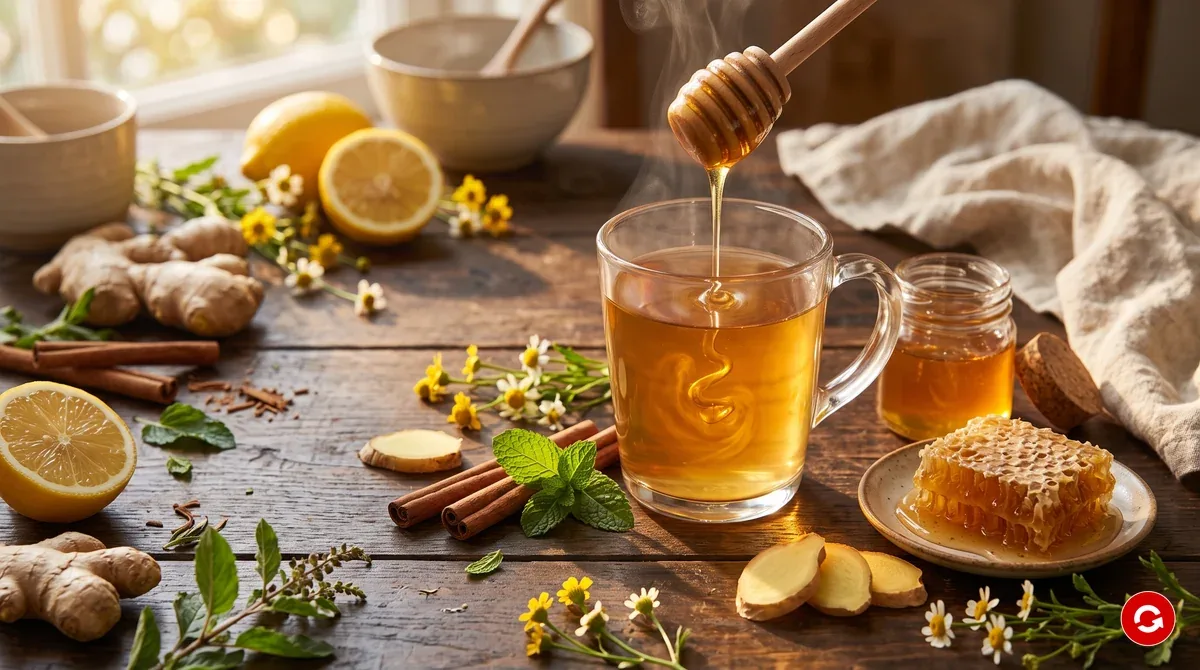
Honey in warm water is one of the most common home drinks in India: a spoonful of honey stirred into a glass of warm water. People search for the benefits, the right temperature, and how often it is fine to have. This guide explains how to make it, what the drink can reasonably do, and where honey fits in a day’s sugar.
The short version: it is a pleasant, soothing drink, but honey is still sugar, and the big claims online are not backed by strong evidence.
Honey in Water: Simple Recipe
You need (1 glass, about 250 ml)
- 250 ml of water, warm and comfortable to sip
- 1 teaspoon of honey
- Optional: a slice of ginger, a pinch of cinnamon or a few mint leaves
Steps
- Boil the water and let it cool until it is warm, not scalding.
- Stir in the honey until it dissolves.
- Sip it slowly. Make a fresh glass each time.
Lukewarm water works too, and so does cool water in summer. There is no single correct temperature, so choose what you enjoy.
Honey in Water Benefits: What Is Reasonable
The benefits of honey in warm water are practical, not dramatic.
- It helps you drink more water. A lightly sweetened warm drink is easier to finish than plain water for many people.
- It soothes. A warm drink with honey is a traditional comfort when the throat feels dry. The British Heart Foundation says there is little evidence that honey treats cough or sore throat symptoms, and that any relief may come from the warm drink and the fluid itself.
- It can replace a sweeter drink. Honey in water instead of sweetened tea, soda or packaged juice can cut the sugar you take in over a day, but only if it truly replaces something sweeter.
It does not melt fat, detox the body or treat any condition.
Honey and Sugar: What the Numbers Say
Honey is a free sugar, like table sugar. The British Heart Foundation gives about 6 g of sugars and 21 kcal in a teaspoon (7 g) of honey, against 4 g and 16 kcal for a teaspoon of sugar. It says honey has only trace vitamins and minerals, so it is not a source of nutrition. It also notes that honey has a lower glycaemic index than sugar, but that this does not make it a better choice for people with diabetes.
The World Health Organization counts the sugars in honey, syrups and fruit juices as free sugars. It advises keeping free sugars below 10% of daily energy and says below 5% (roughly 25 g, or 6 teaspoons) gives additional benefit. One teaspoon in a glass fits easily. Several glasses with heaped spoons add up quickly.
Warm Water and Honey in the Morning
Many people have honey water first thing because it is easy to tie to a habit. After a night without drinking, a glass of warm water is a simple way to start the day’s fluids. The benefits of honey and warm water on an empty stomach are often overstated online. For most healthy people it is a pleasant drink, not a treatment. If it bothers your stomach, have it after food.
How Often Can You Drink It?
One glass a day is plenty for most people. If you drink it more often, measure the honey so the sugar does not creep up, and count it as part of your daily sugar along with sweet tea, sweets and packaged drinks. The British Heart Foundation gives a UK limit of 30 g of free sugar a day for adults, about 7 teaspoons, and this includes honey.
Ways to Vary Honey Water
- Honey ginger water. Add a slice of ginger while the water heats for a warm, spicy flavour.
- Honey cinnamon water. A pinch of cinnamon in warm water, stirred well.
- Honey mint cooler. Cool water, a little honey and fresh mint leaves for summer.
- Honey tea. Stir a little honey into plain or herbal tea instead of sugar.
Choosing Honey
Check that the label lists only honey, with no added syrups. Some products are blends, so a short ingredient list is a good sign. Store honey in a closed jar at room temperature. It does not need the fridge. Whatever the type, honey counts as sugar.
Who Should Be Careful
- Babies under 12 months. The CDC says honey given to children younger than 12 months may cause a severe food poisoning called botulism, and advises against adding it to a baby’s food, water or formula.
- Diabetes or watching your sugar. Honey raises blood sugar like other sugars. Ask your doctor or dietitian how it fits your plan.
- Weight management. Honey adds calories, so measure it.
- Teeth. Sugary drinks sipped slowly all day are hard on teeth. Drink it in one go and rinse with plain water.
- Allergies. Avoid it if you are allergic to honey or pollen.
This article is general information. It is not medical advice and does not diagnose, treat, cure or prevent any disease. If you have a medical condition, are pregnant or take medication, check with your doctor before trying new ingredients.
Honey in Water FAQ
Q1. What are the benefits of honey in warm water?
It makes water easier to drink and is soothing, and it can replace a sweeter drink. It does not detox the body or treat any condition.
Q2. Is it better to drink honey in hot, warm or cold water?
Any comfortable temperature works. Warm water is soothing, and cool water is refreshing in summer. Avoid scalding water because it is hard to sip.
Q3. Can I drink honey water every day?
Many people do, in one glass with a teaspoon of honey. Count it in your daily sugar, and check with your doctor if you have diabetes.
Q4. Does honey in water help with weight loss?
Not on its own. Honey adds calories. It helps only if it replaces a sweeter or higher-calorie drink.
Q5. How much honey should I add to a glass?
One teaspoon is a common amount and has roughly 6 g of sugars.
Q6. Is honey water good on an empty stomach?
Many people have it in the morning without trouble. If you get discomfort, have it after food instead.
Sources and Next Step
- Is honey good for you?, British Heart Foundation.
- WHO calls on countries to reduce sugars intake among adults and children, World Health Organization, 2015.
- Foods and Drinks to Avoid or Limit, US Centers for Disease Control and Prevention.
Not sure which ingredients suit your routine? Take Gulpit’s free wellness check-up for a personalised look at your habits.
Share This On Your Favourite Platform!
Table Of Content


