
Amla Juice: How to Make It and Drink It
Amla Juice: How to Make It and Drink It
Make fresh amla juice at home in about ten minutes. This guide covers a simple recipe, ways to soften the sour taste, how much to start with and who should check with a doctor first.
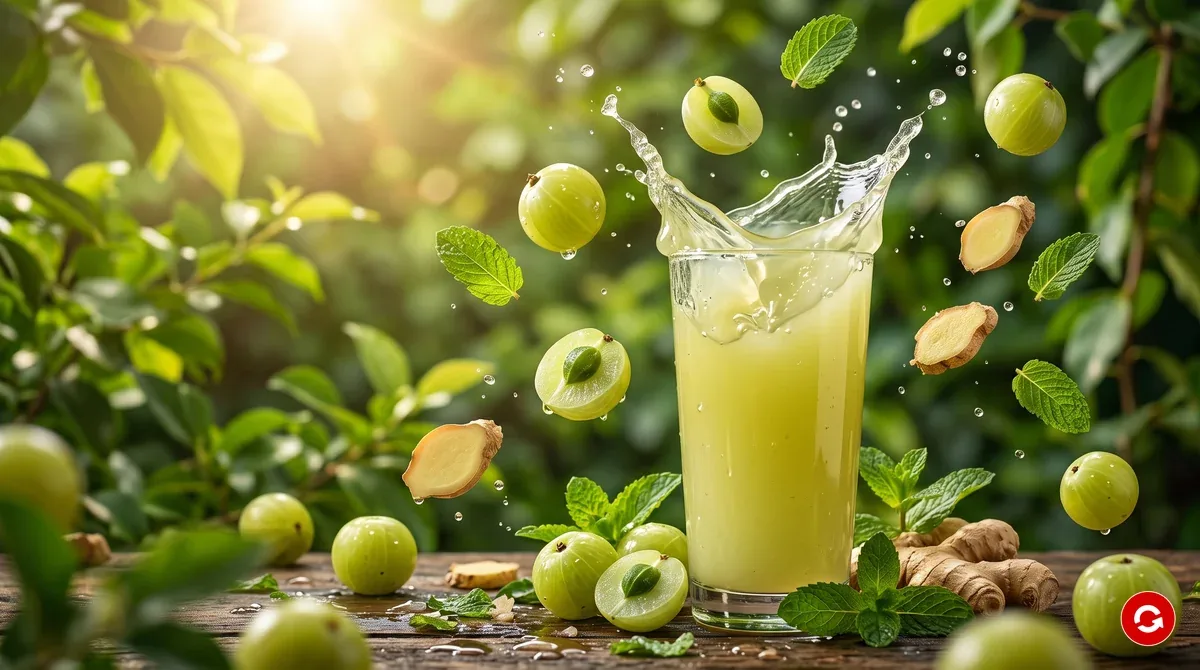
Amla (Indian gooseberry, also called nellikai or amalaki) makes a tart, slightly bitter juice that people either love or struggle to finish. The trick is making it drinkable and starting with a small amount.
This guide gives a simple homemade recipe, ways to soften the taste, and a sensible way to drink it. It also lists who should check with a doctor first.
Amla Juice Drink: Simple Homemade Recipe
Fresh amla juice takes about ten minutes and needs no special equipment beyond a blender.
You need (makes about 1 glass)
- 3–4 medium amla (about 100 g), washed
- 120 ml (half a cup) of water
- Optional: a small piece of ginger, a few mint leaves, a pinch of black salt, or a little honey or jaggery
Steps
- Cut the amla into pieces and remove the seeds.
- For a milder taste, steam the pieces for about 5 minutes first. Raw amla gives a sharper, more astringent juice.
- Blend the amla with the water until smooth.
- Strain for a thin juice, or leave it unstrained to keep the fibre.
- Stir in any optional ingredients. Drink fresh, or refrigerate and finish within a day.
Softening the taste. Dilute with more water, add mint or ginger, or add a small amount of honey or jaggery. Keep any sweetener small, because it still counts as sugar.
Packaged juice. Check the label for added sugar and the amla content before buying. Many bottled versions are heavily diluted or sweetened.
How Much Amla Juice to Drink, and When
People search for amla juice benefits, the advantages of amla juice and the benefits of gooseberry juice more than anything else, so here is the honest version. Amla is widely described as one of the richest fruit sources of vitamin C and has long been used in Ayurveda as amalaki. That makes it a nutritious, tangy addition to a varied diet. It does not make amla juice a treatment for any condition.
- Start small. A small glass, with about 30–60 ml of juice diluted in water, is a sensible start. There is no standard recommended daily amount, so see how your stomach feels.
- Timing. Mornings or between meals are common. If the sourness feels sharp, have it with or after food.
- Daily or occasional. Many people drink it daily in small amounts. It is reasonable to take a break now and then.
- Juice or whole fruit. Eating the whole amla keeps the fibre. Juice is quicker and easier for those who dislike the bite.
- Combinations. Amla pairs well with ginger, mint, cucumber or honey.
Why Vitamin C Gets Mentioned with Amla
Amla is traditionally valued for its vitamin C and is widely described as one of the richest fruit sources. According to the NIH Office of Dietary Supplements, vitamin C is needed to make collagen, acts as an antioxidant, supports normal immune function and helps the body absorb iron from plant foods. The recommended daily intake for adults is 75 mg for women and 90 mg for men.
The vitamin C in a glass of juice depends on the variety, the ripeness, and how the juice is made and stored. Treat amla juice as a tangy food, not a measured dose.
Amla Water, Amla Shots and Other Ways to Drink It
You may see amla sold as Indian gooseberry juice, gooseberry juice or nelli juice. They all refer to the same fruit.
- Amla water. Stir 1–2 tablespoons of fresh amla juice into a glass of plain or warm water. It is milder than straight juice and easier to drink regularly.
- Amla shot. A small, concentrated serving of about 30 ml. Because it is strong, many people dilute it or have it with food.
- Amla with ginger or mint. Blend a small piece of ginger or a few mint leaves with the amla for a sharper, fresher taste.
- Amla with honey. A teaspoon of honey softens the sourness. Keep it small, since honey is still sugar.
Storing Fresh Amla Juice
Fresh juice is best the same day. Refrigerate it in a clean, closed bottle and finish it within a day. To keep more, freeze it in an ice-cube tray and thaw one cube at a time. Vitamin C is sensitive to heat and air, so do not leave juice open or in the sun.
Who Should Be Careful
- Acidity, heartburn or ulcers. Amla is sour and can aggravate these for some people. If it does, stop and ask your doctor.
- Diabetes medicines or blood thinners. Amla is often described as affecting blood sugar and clotting. If you take medicines for either, check with your doctor before drinking it regularly.
- Planned surgery. Tell your doctor if you have surgery coming up and drink amla regularly.
- Kidney disease or kidney stones. Very high vitamin C intake may raise the oxalate in urine, and the NIH notes the clearest link is in people who already have high urinary oxalate. The evidence is mixed, so ask your doctor before drinking amla juice often.
- Pregnancy and breastfeeding. Check with your doctor first.
This article is general information. It is not medical advice and does not diagnose, treat, cure or prevent any disease. If you have a medical condition, are pregnant or take medication, check with your doctor before trying new ingredients.
Amla Juice FAQ
Q1. Is it okay to drink amla juice daily?
Many people do, in small amounts. There is no standard recommended amount, so start with a small glass and check with your doctor if you have a medical condition or take medicines.
Q2. What are the benefits of eating one amla daily?
A whole amla gives vitamin C and fibre as part of your day’s food. It does not treat or prevent any condition.
Q3. Is raw amla better than amla juice?
Raw amla keeps the fibre. Juice is easier if you dislike the sharp taste. Both are fine as part of a varied diet.
Q4. Can I make a drink with amla powder instead?
Yes. Many people stir about half a teaspoon of amla powder into a glass of water. Check the label for added ingredients.
Q5. Can I mix amla juice with other drinks?
Amla goes well with ginger, mint, cucumber or a little honey. Add sweeteners in small amounts.
Source and Next Step
- Vitamin C: Fact Sheet for Health Professionals, NIH Office of Dietary Supplements.
Not sure which ingredients suit your routine? Take Gulpit’s free wellness check-up for a personalised look at your habits.
Share This On Your Favourite Platform!
Table Of Content


