
Moringa Oleifera: Benefits, Uses and Cautions
Moringa Oleifera: Benefits, Uses and Cautions
Moringa, the drumstick tree, is a nutritious leafy green with limited research behind health claims. Learn what is known about its leaves, how to use them in drinks and meals, and who should check with a doctor.
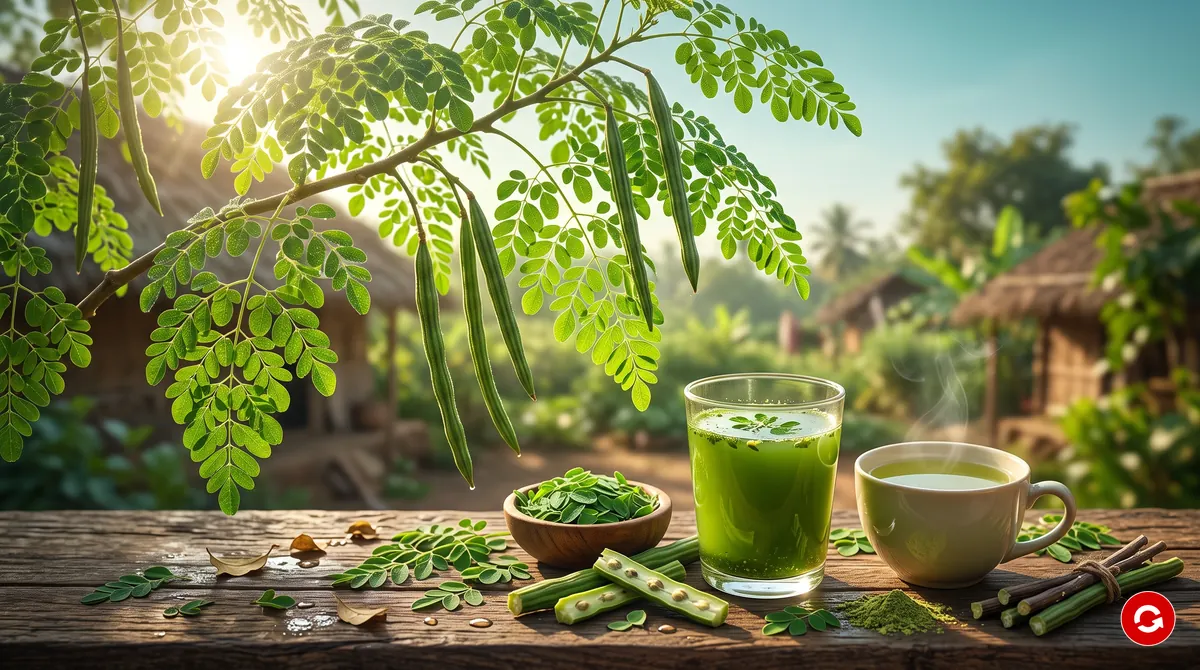
Moringa oleifera is the drumstick tree, known in India as sahjan, sajna, murungai or the drumstick plant. Its leaves, pods and seeds are all eaten, and the leaves get most of the attention.
The leaves are a nutritious green, but the research on health effects is thinner than the marketing suggests. This guide explains what is known, how to use moringa in drinks, and who should be careful.
Moringa Oleifera Benefits: What We Know
Moringa leaves are traditionally eaten as a nutritious green, and that is where the evidence is strongest.
Nutrition
Moringa leaves are widely reported to be rich in minerals such as iron and calcium, and in vitamin A and protein. Fresh leaves, drumstick pods and drumstick soup are everyday foods in many Indian homes. The amount you actually eat matters: a handful of leaves in a dish gives far less than the per-100 g figures printed on packs, so treat moringa as a nutritious addition to meals, not a replacement for varied food.
Research on health effects
Many studies on moringa are in the lab or on animals. Human studies are fewer and smaller. This means the evidence does not support claims that moringa treats or prevents blood sugar problems, high blood pressure, cholesterol problems or any other condition. “May support” is as far as the evidence reasonably goes, and it is not a replacement for medical care.
A PubMed search shows recent systematic reviews on moringa covering body weight, blood pressure, cardiometabolic outcomes and hair. Some of them call for more high-quality human trials, which is why the safest summary is that moringa is a nutritious food with promising but unproven effects.
Moringa benefits for men and women
The nutrients in the leaves are the same for everyone. Claims that moringa does something specific for men or for women are not well supported, so be cautious of products that promise it. For women who are pregnant or breastfeeding, see the cautions below.
Leaves, pods and seeds
The leaves are the main source of nutrients, so moringa leaf benefits are mostly nutritional. Pods (drumsticks) add fibre and are eaten in sambar and curries. Seeds are less commonly eaten and are not covered in this article.
Ways to Use Moringa in Drinks and Meals
Fresh leaves are the best place to start.
- Moringa leaf tea. Steep a small handful (8–10 fresh leaves) in hot water for about 5 minutes, then strain. Add a squeeze of lemon if you like.
- Moringa green juice. Blend a handful of leaves with water, a little cucumber and lemon, then strain. The taste is earthy, so start with a small amount.
- Drumstick soup. Simmer drumstick pods with a little onion, ginger and pepper, then scrape out the pulp and strain.
- In meals. Add leaves to dal, eggs, dosa batter or stir-fries near the end of cooking.
Start with small amounts and see how your digestion responds. There is no standard recommended amount of moringa.
Moringa, Drumstick and Sajna: Many Names, One Tree
Moringa oleifera goes by many names. In India it is the drumstick tree, called sahjan or sajna in the north, murungai in Tamil and shevga in Marathi. In the Philippines it is malunggay. Searches for moringa plant benefits, drumstick plant benefits and sajna tree benefits all refer to the same plant, so everything in this article applies to each.
Drumstick Pods and Drumstick Soup
The long green pods are the “drumsticks” in sambar and curries. They add fibre and are a common way to eat moringa as a vegetable. Drumstick soup is an easy warm option: simmer pod pieces in water with a little onion, ginger and pepper, scrape out the soft pulp from the pods and strain. It is a hydrating, light dish, but like the rest of moringa it is food, not medicine.
Choosing and Storing Fresh Moringa Leaves
- Choose bright green leaves and avoid any that are yellow or wilted.
- Wash them well and strip the small leaflets from the tough stems.
- Store them in a container lined with a paper towel in the fridge and use them within a few days.
- Cook them briefly, or add them at the end of cooking, to keep their colour.
Who Should Be Careful
- Pregnancy and breastfeeding. Talk to your doctor first, especially before concentrated forms. Parts of the plant other than the leaves are not generally advised in pregnancy.
- Diabetes, blood pressure or thyroid medicines. Moringa is sometimes said to act on blood sugar and blood pressure. If you take medicines for these, check with your doctor before using it regularly.
- Blood thinners such as warfarin. Moringa leaves are a leafy green. If you take warfarin, keep your intake of greens steady and ask your doctor.
- Planned surgery. Mention regular moringa use to your doctor.
- Digestion. Large amounts can upset the stomach for some people, so start small.
This article is general information. It is not medical advice and does not diagnose, treat, cure or prevent any disease. If you have a medical condition, are pregnant or take medication, check with your doctor before trying new ingredients.
Moringa FAQ
Q1. What is moringa good for?
It is a nutritious leafy green with minerals, vitamin A and protein. The research on specific health effects is limited, so think of it as a food, not a remedy.
Q2. Is the drumstick tree the same as moringa?
Yes. Moringa oleifera is also called the drumstick tree, sahjan, sajna, murungai or malunggay.
Q3. Is it safe to eat raw moringa leaves?
Fresh leaves are commonly eaten in food, raw or cooked, in small amounts. Wash them well and start small.
Q4. How much moringa should I have each day?
There is no standard recommended amount. A small handful of leaves in a meal or a cup of leaf tea is a common starting point.
Q5. Does moringa have special benefits for men or women?
The nutrients are the same for everyone, and claims of gender-specific effects are not well supported.
Source and Next Step
- Recent systematic reviews on Moringa oleifera, PubMed search.
Not sure which ingredients suit your routine? Take Gulpit’s free wellness check-up for a personalised look at your habits.
Share This On Your Favourite Platform!
Table Of Content


