
Amla Benefits: What This Tart Fruit Adds to Your Day
Amla Benefits: What This Tart Fruit Adds to Your Day
Amla is a small, sour fruit rich in vitamin C. Here is what it offers, the many ways people eat it, from raw to murabba, and who should be careful, with answers to common questions.
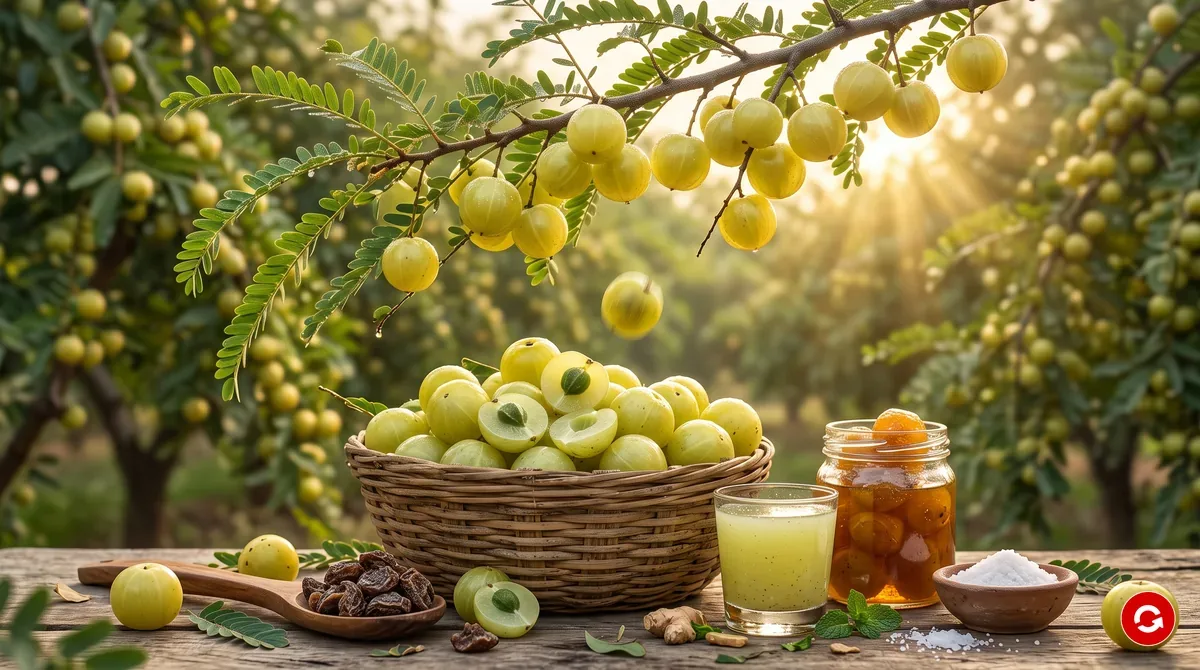
Amla (Indian gooseberry, nellikai or amalaki) is a small, sour green fruit that has been eaten in Indian kitchens for generations. People look it up to find out what it is good for, whether one a day is enough, and how to eat it without wincing.
This guide covers what amla offers, how people eat it and who should check with a doctor first. It stays with what is known about the fruit and its nutrients, not promises.
Amla Ras Benefits: What the Juice Offers
Amla ras is simply fresh amla juice. Amla is widely described as one of the richest fruit sources of vitamin C, so a glass of the juice brings that along with the tang. According to the NIH Office of Dietary Supplements, vitamin C is needed to make collagen, works as an antioxidant, supports normal immune function and helps the body absorb iron from plant foods.
The amount in any glass depends on the variety, the ripeness and how the juice is made and stored, so treat amla ras as a tangy food, not a measured dose. It does not treat or prevent any condition.
Health Benefits of Amla at a Glance
- Vitamin C. The main reason amla is valued. It adds to the vitamin C you get from the rest of your food.
- Fibre in the whole fruit. Eating the fruit, raw or boiled, keeps the fibre that juice leaves behind.
- A low-sugar, savoury-sour snack. Plain amla has a sharp taste that works with salt, chaat masala or ginger instead of sugar.
- Easy to use many ways. Fresh, boiled, dried, as juice, pickle, candy or murabba.
- Long traditional use. In Ayurveda the fruit is known as amalaki and is part of many household routines.
These are food-level benefits. A varied diet with plenty of fruit and vegetables matters more than any single fruit.
Amla Nutrition: What You Get
Raw amla is mostly water, with vitamin C, some fibre and small amounts of other nutrients. Exact figures differ between the large and small varieties and from batch to batch, so there is no single number that fits every amla. For packaged amla products, read the nutrition label, because sugar, salt and oil are often added.
Benefits of Eating Amla Every Day
Many people eat one amla a day, or drink a small glass of juice. There is no standard recommended amount for amla itself, so start small and see how your stomach copes with the sourness.
- Raw amla. Keeps the fibre and the full tang. Have it with a pinch of salt if it is too sharp.
- Boiled or steamed amla. Milder and easier on the stomach.
- Juice. Dilute with water. A small glass is plenty.
- With meals. If the sourness bothers you on an empty stomach, eat it with or after food.
Ways to Eat Amla: Raw, Boiled, Murabba, Candy and Pickle
The way you eat amla changes what you get from it.
- Raw or boiled. The simplest form, with no added sugar.
- Amla murabba and amla candy. Sweet preserves made with a lot of sugar. Amla murabba benefits are limited by the sugar syrup, so treat them as a sweet and keep portions small.
- Amla pickle. Usually high in salt and oil. Enjoy in small amounts.
- Dried amla and amla churna. Convenient, but check the label for added sugar and salt.
- Amla juice. Quick to make at home.
Names You May See: Gooseberry, Nellikai and Amalaki
Indian gooseberry, amla (also spelt awala or amala), nellikai (Tamil and Malayalam) and amalaki (Sanskrit) all point to the same fruit, so searches for gooseberry benefits or amalaki benefits lead to the same answers. Two similar names are different plants. Bhumi amla (also called bhui amla) is a small herb, not the amla fruit. Star gooseberry is a different sour fruit. Check what the product actually contains before you buy.
Is Amla Different for Men and Women?
The fruit itself is the same. What changes is how much of any nutrient a person needs, which depends on age, health and life stage. The NIH lists the recommended daily vitamin C intake for adults as 75 mg for women and 90 mg for men, from all food and drink together, not from amla alone.
Who Should Be Careful
- Acidity, heartburn or ulcers. Amla is sour and can aggravate these for some people. If it does, stop and ask your doctor.
- Diabetes medicines or blood thinners. Amla is often described as affecting blood sugar and clotting. If you take medicines for either, check with your doctor before eating it regularly.
- Planned surgery. Tell your doctor if you have surgery coming up and eat amla regularly.
- Kidney disease or kidney stones. Very high vitamin C intake may raise the oxalate in urine, and the NIH notes the clearest link is in people who already have high urinary oxalate. Ask your doctor before eating amla often.
- Pregnancy and breastfeeding. Check with your doctor first.
This article is general information. It is not medical advice and does not diagnose, treat, cure or prevent any disease. If you have a medical condition, are pregnant or take medication, check with your doctor before trying new ingredients.
Amla Benefits FAQ
Q1. Is it okay to eat amla every day?
Many people do, in small amounts. There is no standard recommended amount, so start with one and see how you feel. Check with your doctor if you have a medical condition or take medicines.
Q2. What are the benefits of eating one amla a day?
One amla adds vitamin C and some fibre to your day’s food. It is a nutritious snack, not a treatment for any condition.
Q3. Is raw amla better than boiled amla?
Raw amla keeps the full tang and fibre. Boiled or steamed amla is milder and easier to eat. Both are fine as part of a varied diet.
Q4. Is amla safe in pregnancy?
Ask your doctor before adding amla to your diet during pregnancy or while breastfeeding. Advice is individual.
Q5. Is amla good for the kidney?
Amla is not a treatment for kidney problems. If you have kidney disease or kidney stones, ask your doctor before eating it often, because high vitamin C intake can raise oxalate in urine.
Q6. Are amla murabba and amla candy as good as fresh amla?
They taste good but contain a lot of added sugar. Treat them as sweets and keep portions small.
Source and Next Step
- Vitamin C: Fact Sheet for Health Professionals, NIH Office of Dietary Supplements.
Not sure which ingredients suit your routine? Take Gulpit’s free wellness check-up for a personalised look at your habits.
Share This On Your Favourite Platform!
Table Of Content


